Showing posts with label BWD. Show all posts

Saturday, 16 June 2012

BWD – David Cronenberg


A look at the Best, the Worst, and the most Different (for better or worse) of the Canadian gore auteur’s canon.


Best


Videodrome (1983)


One of the interesting things about Cronenberg’s early work is that you witness his craft develop film by film.  From Shivers (1975) through Rabid (1977), The Brood (1979) and Scanners (1981) you can observe a consistent through line and witness a new creative force finding his feet.  The Brood and Scanners are more polished than his ‘70s work, but it was with this ode to the evils of television that we saw him come into his own.  At once compelling, baffling, grotesque, unsettling, resonant and unique.


The Fly (1986)


A success in every conceivable way, The Fly is one of those rare occasions where an intellectual, arty director manages to cross over into the mainstream and deliver a huge hit whilst not compromising his vision one bit (aided covertly by producer Mel Brooks, who pulled off the same trick with David Lynch on Elephant Man).  As the director himself said: “An artist's responsibility is to be irresponsible. As soon as you start to think about social or political responsibility, you've amputated the best limbs you've got as an artist.”  Here, the artist was definitely on show, but so were the kind of box office receipts that announced Cronenberg to a wider audience.


Naked Lunch (1991)


Ol’ Davey boy has adapted his fair share of novels, but taking a stab at William S. Burroughs’ impenetrable semi-autobiographical fantasy is his most audacious attempt to date.  Burroughs and Cronenberg are a match made in surrealist hell and by combining the wandering opium-drenched tales with incidents from the beat author’s own life (such as 'the William Tell incident'), Cronenberg creates something that resembles a story and even almost makes sense.  But, of course, not quite – well, no movie where a durg-addicted half-typewriter-half-cockroach issues top-secret national security orders to the protagonist through its anus is ever going to be a study in coherence.   Special mention to Peter ‘Robocop’ Weller as the solid and sardonic core that keeps the endeavour from careering totally off the rails.


Crash (1996)


There’s no other movie quite like Crash (ignoring the 2004 film of the same name, which is just as unlike it as anything else is).  It’s been described as ‘a porno set on an alien planet’ and so it proves; not many films have three sex scenes in the opening ten minutes, as detached couple James Spader and Deborah Kara Unger float through their empty lives seeking thrills from mutually shagging anything that moves but finding no satisfaction.  That is until Spader is in a fender bender and starts an affair with the other victim, Holly Hunter, whose husband was killed in the incident, a liaison that leads them to Elias Koteas and his underground movement of re-staging famous crashes (Mansfield, Dean) and generally gaining sexual arousal from car crashes.  Definitely odd and unsettling – it featured in a typically childish ‘band this filth!’ Daily Mail campaign upon release – but also somehow haunting and beautiful. 


A History of Violence (2005)


Often I regret watching movies in the cinema, since an audience’s noise can ruin the experience – the worst is comedies that turn out to be unfunny but still elicit hysterical laughter at obvious jokes and warmed-up scenarios.  I saw A History of Violence on the big screen, and the audience reaction was telling, and very interesting.  There was actually a lot of laughter at a film that no one would describe as a comedy;  but this was awkward, uncomfortable laughter, caused by the tonal shifts as Viggo Mortesten’s family man Tom Stall jolts into his old self, gangster Joey Cusack – sudden, brutal, and shocking.  Cronenberg doesn’t shy away from the viciousness, and that extends beyond just showing blood and gore to an under the surface dissection of a family that becomes infected with violence.  In this way, the movie is as much about disease and transformation as any of his others, and was even more accessible vehicle for bringing the Cronenberg themes to a wider audience than The Fly.

 
Worst


M. Butterfly (1993)


Jeremy Iron’s character must have slept through Biology class, since he fails to clock that the ‘woman’ he’s been having an affair with is really a bloke.  Even if you can suspend your disbelief enough to get over this ridiculousness, M. Butterfly is still a dull and pretentious operatic misfire.


A Dangerous Method (2011)
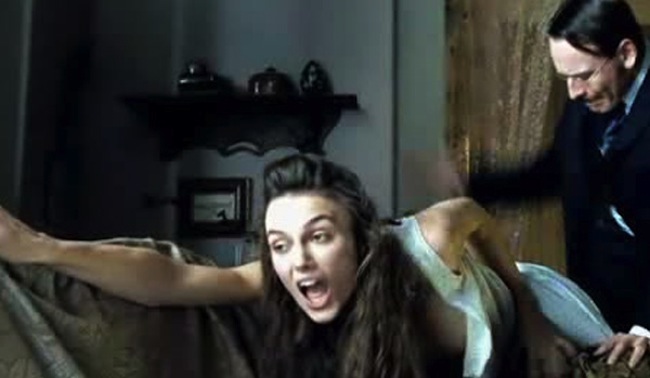


Despite a trio of good lead performances – Viggo Mortensen and Michael Fassbender excel as Freud and Jung, and Keira Knightley is, despite some reports, solid – A Dangerous Method never find a narrative foothold and is just a collection of intriguing but shallow psychoanalytical insights with no coherent flow.  The result is as boring as a droning undergrad lecture; when Knightly-spanking doesn’t liven things up, you know you’re in trouble.


Different


Fast Company (1979)


Those complaining about how ‘un-Cronebergian’ the man’s recent output is would do well to remember that he could go against his own grain decades earlier.  Despite having no body mutilations, transgression themes or identity crisis, this tale of drag racing across the US does showcase one of the director’s more covert obsessions:  things that go vroom.  Only unlike in Crash, no one has sex with a car crash wound.  

Monday, 7 May 2012

BWD – Bruce Willis


A look at the Best, the Worst, and the most Different (for better or worse) of the enduringly iconic action veteran’s resume.


Best

Die Hard (1988)


Much has been written about Bruce’s breakthrough role, of course.  All I’ll add here is that if Russell Crowe – talented as he is, don’t get me wrong – can win an Oscar for Gladiator, an action movie with sandals, then Bruce should have at least been nominated for his towering work in the Nakatomi tower.


Pulp Fiction (1994)


Though it now reads like a who’s who of ‘90s casting (Stoltz, Roth, Rhames, Plummer, Arquette) and was the breakthrough for legend-in-waiting Samuel L. Jackson, the best piece of casting in Tarantino’s sophomore effort was our Bruce.  Comeback-wise, Travolta had to rise above worse (four words: Look Who’s Talking Now), but Willis had suffered a dip in popularity – via bombs like The Bonfire of the Vanities, Striking Distance and Hudson Hawk – that threatened to crash his movie star credibility when it was just taking flight.  As Butch Coolridge, Bruce is tough, wounded, sardonic and sensitive (the unexpectedly tender bedroom scene with Maria de Mederios) in turn, but it’s towards the end of ‘The Gold Watch’ vignette that a star is re-born. 

Having escaped from his gimp-suited guard, Butch has his hand on the front door knob, but hesitates.  In a moment of clarity, he realises that even though Marcelles Wallace was shooting at him earlier that morning, he is his brother in arms, and Butch can’t take his own freedom without going back for his comrade.  So he goes through his weapon options, and picks an antique samurai sword, giving the screen an image of bloody and beaten one-man redemption to rival any of John McClain’s best moments.  Welcome back, Bruce.


Twelve Monkeys (1995)


I remember reading an interview Willis did for Pulp Fiction where he said that he was sick of running around holding a gun, and wanted to stretch himself further as an actor.  Whilst subsequent releases like The Fifth Element, The Jackal, Tears of The Sun and Hostage (not to mention Last Man Standing, 16 Blocks, Die Hard 4.0, R.E.D, G.I. Joe: Retaliation…) have rendered this declaration void, he did go through a late ‘90s hands-free period that produced his strongest performances.  His turn as time traveller James Cole sees him vulnerable, confused and alone, and brought a depth of performance that had barely been hinted at before.  Brad Pitt’s showier turn got a Best Supporting Actor nom, whereas Bruce was typically, and unfairly, overlooked.


The Sixth Sense (1999)


Willis has always been good with child actors.  Sandwiched between his kiddie-centric roles in Mercury Rising and M. Night Shyamalan’s follow-up Unbreakable, Sixth Sense is Bruce’s best screen performance.  Quiet, mournful and with neigh a smirk in sight, it’s a testament to how he commands our attention that he stops the viewer from noticing what, on reflection, was a pretty sign-posted twist.  The gimmick value of the movie’s ending, as well as all the focus on man child-child Haley Joel Osment, meant that Bruce’s good work went largely unnoticed.       


Sin City (2005)


Frank Miller called Willis ‘his generation’s Humphrey Bogart’, and it’s hard to disagree.  Few other actors could have brought the same mixture of toughness and vulnerability to the role of betrayed and beleaguered cop John Hartigan, who has to be equally comfortable stomping a yellow paedo-freak’s face into the ground as struggling with polemic fatherly and erotic urges towards a suddenly developed Jessica Alba.  As in Pulp, Bruce stands out from a star-studded cast.


Worst

Hudson Hawk (1991)


Vanity projects are never a good thing:  they reek of smug self-indulgence and you always feel that they were having a lot more fun making the thing than you are watching it.  Hudson Hawk is one of the very worst, a charmless romp that resembles a hyperactive toddler as it runs all over the place, producing a lot of noise, making very little sense and exhausting all that keep its company.


Color of Night (1994)


Ever fancied seeing Bruce Willis’s penis?  Here’s your chance, as it makes a cameo appearance flopping about in the swimming pool during one of many tedious sex scenes with Jane Marsh in this woeful erotic thriller. Taking over a therapy group from murdered buddy Scott ‘Quantum Leap’ Bukula, psychiatrist Bruce has to figure who from a troubled line-up including the likes of Brad Dourif, Lance Henriksen, Lesley Ann Warren and Marsh in drag is really a killer.  Silly doesn’t begin to cover it.


Different

Death Becomes Her (1992)


Willis ditched his macho image just as he was cultivating it to go against the grain as wimpy plastic surgeon Ernest Menville, who spends the whole movie being manipulated by ageing divas Goldie Hawn and Meryl Streep.  Willis lets the clown he had so far kept mostly within run free – if you can ignore Hudson Hawk, which is advisable – gurning his way through Robert Zemekis’ dated but fun screwball romp. One thing you can say about the man is that even this early in his career, only four years after Die Hard, he wasn’t afraid to send himself up.
 

Wednesday, 21 March 2012

BWD - Paul Verhoeven


A look at the Best, the Worst, and the most Different (for better or worse) of the delirious and deviant Dutch director’s dossier.


Best


Total Recall (1990)


Teaming a man who was steadily carving out a niche as a purveyor of violent mayhem with the actor responsible for the largest body count in Hollywood was a truly inspired move.  Verhoeven gleefully lingers on bullet-ridden corpses, accentuates each *crack* as Arnie’s Douglas Quaid/Hauser breaks necks and spines, and turns the legend that is Michael Ironside into a double amputee; meanwhile, he satisfies his lust for random flesh with a three-breasted Martian prostitute.  There’s not really much one can add to that (except to say that the Colin Farrell remake has some living up to do).


Robocop (1987)


Atheist Verhoeven delivers a Christ analogy that’s every bit as brutal as Mel Gibson’s 2004 literal re-telling.  The broad comedy of the mock TV ads sits alongside digs at '80s yuppie excesses and is fused to some of the nastiest onscreen villainy in mainstream cinema:  witness the cruel delight sleazoid crime lord Clarence Boddicker (Kurtwood Smith) and his gang take in torturing rookie cop Alex Murphy (a solid Peter Weller), who is then resurrected to generate positive PR for the heartless corporate that owns near-future ‘New’ Detroit’s privitised police force.  All the staples from Verhoeven’s Dutch movies are on show in his US debut:  satire of authority; ultra-violence; religious and fascist symbolism; nudity.


 Starship Troopers (1997)


No other popcorn movie is as simultaneously gung-ho and cunningly subversive as this gloriously violent interstellar caper.  Edward Neumeier takes Robert A. Heinlein’s straight-laced source novel and cranks up the military satire to eleven, portraying a future society that uses xenophobic propaganda to recruit young square-jawed Aryan warriors to fight unprovoked against a dehumanised foe (they’re only insects – let’s squish ‘em!), whilst Verhoeven – who grew up in occupied Holland during World War II – delights in bombarding the viewer with not-so-subtle Nazi imagery like grey Gestapo-style uniforms with long leather jackets and Eagle motifs.  And how can you argue with lines like “Shoot a nuke down a bug hole, you got a lot of dead bugs”?


Basic Instinct (1992)


Pauly V really hit his stride with this extremely trashy and enjoyable guilty pleasure that didn’t do the careers of him, screenwriter Joe Eszerthas or star Sharon Stone much harm at all.  It’s taken its fair share of flack over the years and has dated poorly (few flicks scream the '90s quite as loudly), but the fact is it’s a thriller that can legitimately be dubbed ‘Hitchcockian’:  icy blonde, morally conflicted protagonist, simmering tension, San Francisco setting, Jerry Goldsmith’s Bernard Herrmann-esque score – and it contains a level of explicit sleaze that the pervy old master would have loved to have gotten away with in his time.


Worst

Showgirls (1995)


After the phenomenal success of Basic Instinct, Verhoeven could do pretty much what he wanted.  He chose to re-team with Eszerthas for this utterly awful tale of a small town girl trying to make it as a Las Vegas stripper.  Kind of like All about Eve with nipple tassels, Showgirls manages to have some of the worst acting (Elizabeth Berkley), dialogue (“You have great tits.” “Thank you.” “I like nice tits, how about you?” “I like having nice tits.”), sex (the swimming pool scene, where Berkley flaps about like a salmon whilst straddling an embarrassed-looking Kyle MacLachlan), and haircuts (MacLachlan again) ever commited to screen.  It has a cult status for being so-bad-it’s-good, but that doesn’t mean it wasn't bad in the first place.


Different

Hollow Man (2000)


A bland flick that could have been directed by anyone, our man downplays his usual bombastic style and produces a feature that is sorely lacking in Verhoeven trademarks:  no excessive nudity, no corporate satire, only moderate violence.  Kevin Bacon enjoys himself in the obnoxious lead role and those invisibility special effects are pretty impressive, but the overall feeling is of a hired hand directing with one eye on the mortgage repayments.  Hollow indeed.